
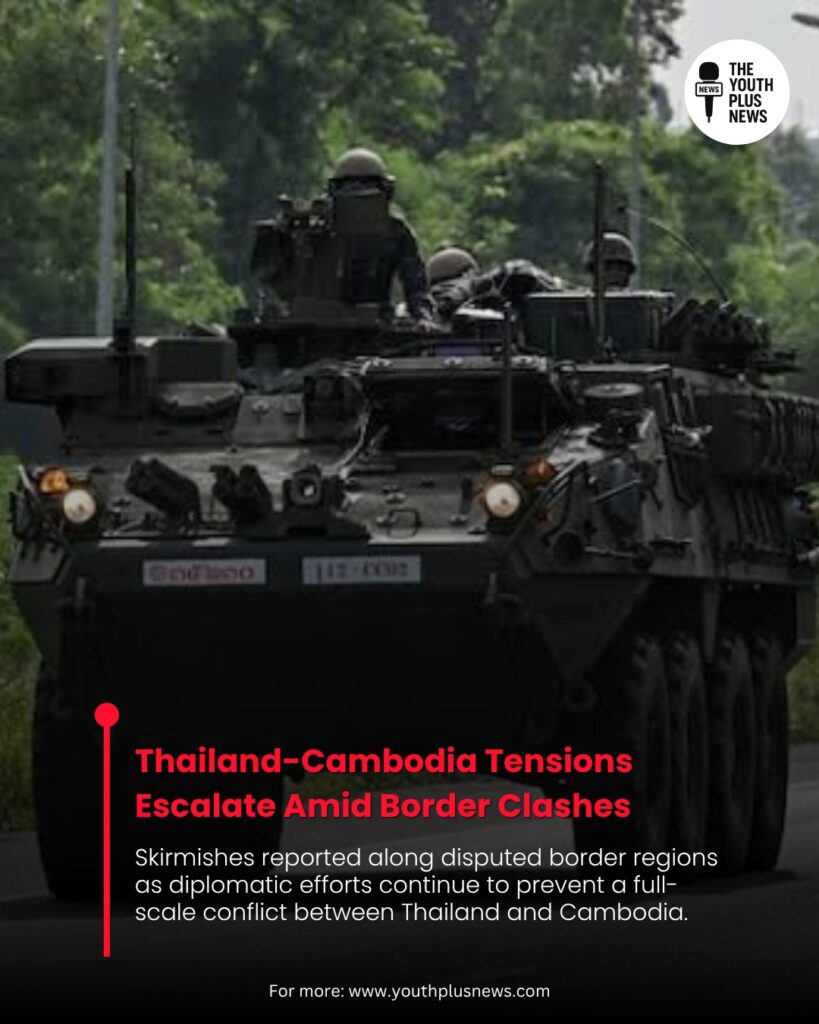
In one of the most violent escalations between Thailand and Cambodia in more than a decade, armed clashes on 24 July 2025 triggered aerial strikes, artillery shelling, and severe diplomatic fallout. The frontline—near the disputed Ta Muen Thom (Prasat Ta Muen Thom) temple—has again drawn global attention to a long-standing border dispute rooted in colonial-era demarcations.
Key Flashpoints and Casualties
Skirmishes began early morning when troops from both sides opened fire near the ancient temple, located along the border of Thailand’s Surin province and Cambodia’s Oddar Meanchey province. Cambodian forces deployed drones and rocket launchers, while Thailand responded with six F‑16 sorties, striking Cambodian military bases. Singapore’s BM‑21 rockets reportedly hit fuel stations and hospitals in Thailand, causing civilian deaths and injuries.
Reports confirm at least 11 civilians and one Thai soldier died, including an 8-year-old boy, and dozens were wounded. Thailand also announced destruction of two Cambodian tanks in a retaliatory strike.
Diplomatic Fallout
In response to the hostilities, Thailand downgraded diplomatic ties—recalling its ambassador and expelling Cambodia’s envoy. Cambodia called Thailand’s military actions “premeditated aggression” and formally appealed to the UN Security Council while ASEAN scaffolding for de-escalation gained urgency.
Historical Roots and Political Triggers
This border flare-up revives a dispute over colonial-era mapping. Thailand and Cambodia have long contended over territory around the Preah Vihear Temple, awarded to Cambodia by the ICJ in 1962 but repeatedly contested by Thai nationalists. The latest clash follows an earlier incident in May where a Cambodian soldier died near Chong Bok, rekindling tensions.
Political instability within Thailand, including the suspension of Prime Minister Paetongtarn Shinawatra over a leaked call with Cambodian leadership, has added fuel to nationalist rhetoric, making the conflict politically volatile.
Civilian Panic and Humanitarian Concerns
Civilians living near the border fled to makeshift shelters. Over 4,000 people were evacuated from affected villages, as shelling caused property damage and interrupted cross-border trade. Hospitals were evacuated after being hit, and landmines reportedly injured Thai soldiers, escalating border alarm.
Regional and Global Responses
The United States urged immediate cessation of hostilities and protection of civilians. ASEAN stepped in to reaffirm dialogue channels, while China is being watched as a potential mediator given its close ties to Cambodia. Israel issued travel advisories urging citizens to avoid southwest border areas prone to escalations.
What Lies Ahead
Experts indicate that although an outright war remains unlikely, the situation could deteriorate if troop mobilisations persist and diplomatic channels falter. The conflict may prompt renewed mediation by ASEAN and the ICJ as both sides face pressure to resolve the dispute peacefully and protect their populations.