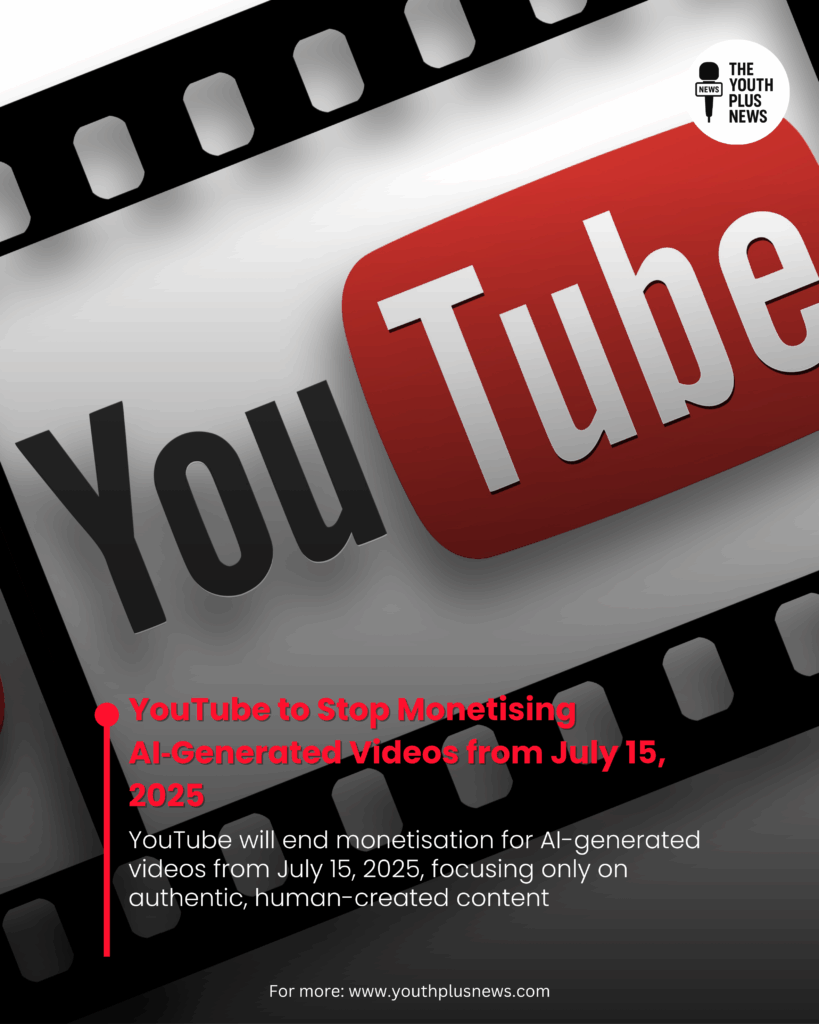
In a major policy change, YouTube has announced it will stop monetizing AI-generated videos starting July 15, 2025. The new guidelines will impact thousands of creators who rely on AI tools to produce videos, animations, explainer content, and synthetic media.
Why is YouTube Banning AI Video Monetisation?
YouTube stated that AI-generated videos, including those made using tools like Sora, Midjourney, D-ID, Runway, and Pika Labs, will no longer be eligible for monetisation through ads. The platform cited concerns over the rise of deepfake videos, AI misinformation, and synthetic content that can mislead viewers or breach copyright rules. While AI content has grown in popularity due to its quick production and viral potential, it also poses ethical and authenticity risks for audiences.
Impact on Creators Using AI Tools
Many creators use AI to generate:
- Faceless YouTube automation videos
- Animated news explainers
- AI voiceover storytelling
- AI deepfake clips
- Educational videos with AI avatars
These channels are known for fast content turnaround without showing the creator’s face. With the new YouTube AI monetisation policy, such creators will lose ad revenue and may need to shift towards original content creation. This aligns with YouTube’s updated content guidelines aiming to prioritise authenticity and original human-created footage.
YouTube’s Official Statement
In its policy update, YouTube explained:
“While AI remains a powerful creative tool for editors, educators, and entertainers, content that is fully AI-generated or synthetic will not be monetised from July 15, 2025. This ensures our platform remains trustworthy and rewards genuine creativity.”
The platform clarified that AI tools used as assistance (editing, scriptwriting, subtitles) will remain allowed. However, videos with AI-generated visuals, people, or entire scripts voiced by AI without any human element will be demonetised.
Why is This Policy Important?
The policy targets rising AI-generated fake news, celebrity deepfake clips, and AI stock videos that violate copyrights or impersonate public figures. Recently, AI deepfake controversies have impacted multiple countries’ elections and brand reputations, raising calls for stricter regulations on AI media. YouTube’s move is seen as a proactive approach to curb potential misinformation risks.
Future of AI Content on YouTube
While AI content is not banned, creators cannot earn from it unless they add significant human contribution. The new policy encourages:
- Original recorded footage
- Face cam explainers
- Real human voiceovers
- Transparent AI usage disclaimers
Creators relying heavily on AI will need to diversify their strategies to remain monetised.