
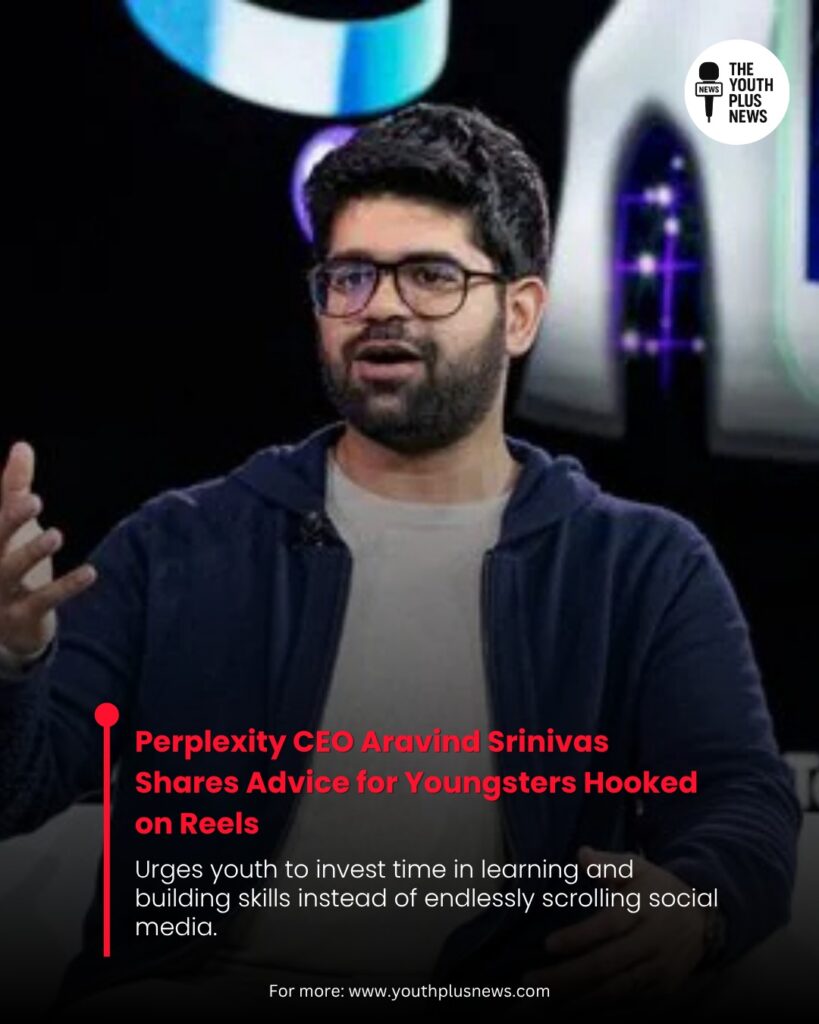
Aravind Srinivas, the co-founder and CEO of Perplexity AI, recently delivered a strong message for young people navigating their careers in an era dominated by digital distractions. Speaking about the future of work and technology, Srinivas urged students and early professionals to spend less time doomscrolling social media and invest their energy in understanding artificial intelligence, which he termed as the most transformative force of this century.
Why His Advice Matters
As the head of Perplexity AI, an advanced AI search engine platform rivalling traditional information tools, Srinivas stands at the forefront of global AI innovation. His blunt career advice is rooted in the rapidly changing job market where AI proficiency is no longer optional but essential for long-term relevance and growth.
He highlighted how doomscrolling—mindlessly consuming negative or sensationalist news feeds—wastes hours daily without adding any tangible value to knowledge or personal development. Instead, he recommended dedicating at least one hour a day to learning AI fundamentals, programming, or building small machine learning projects, to build a strong foundation for future jobs.
AI as a Foundational Skill
Srinivas explained that AI is not just for coders or tech researchers. Its integration in medicine, law, journalism, business analytics, design, and education is already visible and accelerating. “Regardless of your career domain, understanding how AI tools work, their ethical frameworks, and where automation is headed will empower you to stay ahead,” he said.
He pointed out that many graduates enter the job market with minimal understanding of AI beyond user-level exposure. This limits their adaptability and opportunities in the coming decade, where AI-native skills will define employability.
A Wake-Up Call Against Passive Consumption
Doomscrolling became widespread during the pandemic and continues as a digital habit among youth worldwide. Srinivas cautioned that while staying updated is important, excessive negative content drains motivation, amplifies fear of missing out (FOMO), and leads to mental fatigue, ultimately derailing career focus.
Instead, he suggested:
- Curated learning: Following AI researchers, professors, and credible explainers rather than trending gossip accounts.
- Hands-on practice: Using open AI platforms to experiment with building chatbots, prompts, and data analysis tools.
- Critical thinking: Understanding AI ethics, biases, and implications rather than blindly celebrating new releases.
India’s Youth and the AI Revolution
His comments resonate strongly in India, where millions of engineering and management graduates enter an increasingly competitive market each year. With AI adoption rising across Indian startups, banks, ed-tech platforms, and manufacturing firms, domain knowledge combined with AI literacy can set candidates apart.
Final Words
Aravind Srinivas’ advice is not merely about coding, but about adapting mindsets to thrive in an AI-first world. As he summarised, “If you spend less time doomscrolling and more time learning how AI works, you won’t just keep your job – you’ll create jobs, businesses, and solutions that will define the future.”
For young people aiming to build resilient, impactful careers, this wake-up call serves as a reminder to invest daily in learning skills that matter rather than surrendering precious hours to mindless digital consumption.