
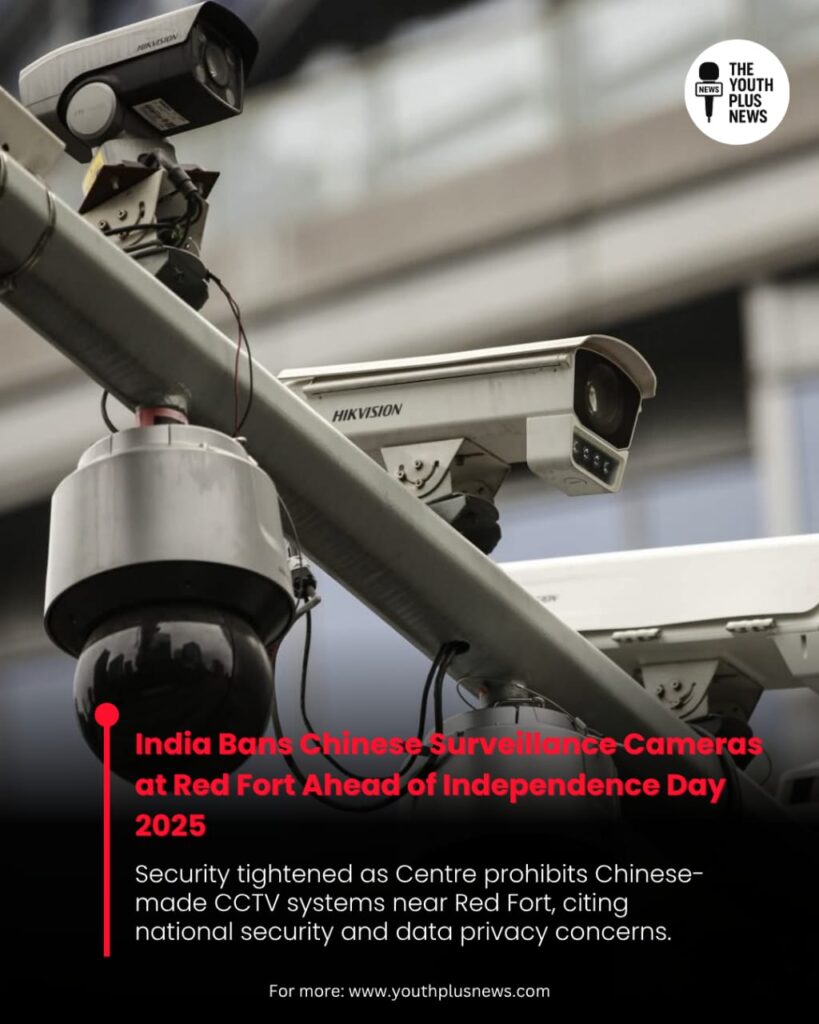
In a decisive move to tighten security, the Indian government has banned all ‘Made in China’ surveillance cameras in and around the Red Fort for this year’s Independence Day (August 15) celebrations. The directive is part of broader security preparations, including aerial surveillance, anti-drone systems, and enhanced facial recognition measures.
🔐 Why the Ban?
Authorities cited data privacy and national security concerns. Chinese-made surveillance gear, including brands like Hikvision and Dahua, has faced scrutiny worldwide due to perceived links with state intelligence operations and potential for espionage.
India’s strengthened regulations now require foreign and domestic camera makers to submit source code, hardware, and software for government certification, effective from April 2025.
The directive explicitly instructs all vendors not to deploy Chinese surveillance devices in areas near the Red Fort for the national event. This stems from recent threats like Operation Sindoor, which saw attempts at drone-based aggression, highlighting vulnerabilities in aerial surveillance infrastructure.
🛡 Enhanced Security Deployment
To secure the venue and surrounding zones, authorities have rolled out multiple layers of surveillance and defence measures:
Anti-drone systems and radar deployments
Aerial patrols by the Indian Air Force
Facial recognition, automatic number plate recognition (ANPR), head-count, and intrusion-detection cameras
A multi-agency census exercise involving Delhi Police, Intelligence Bureau, and local security agencies to verify non-local individuals residing near Red Fort neighborhoods
Reports also indicate deployment of multiple types of high-tech cameras including unmanned CCTV with suspicious-object detection and live intrusion alert capabilities.
🌍 Global Security Context
Other democratic nations—including the U.S., U.K., Australia, and Canada—have also taken steps to ban or remove Chinese surveillance equipment from sensitive government sites. Many have raised concerns over mass surveillance and potential human rights violations linked to these technologies.
India’s move reflects growing caution over Chinese tech equipment—especially since China currently dominates a significant share of India’s CCTV market. Indian regulators have already imposed strict testing protocols for imported surveillance hardware.
📝 What It Means
The ban is temporary and location-specific, applying solely around the Red Fort during the Independence Day celebrations.
It signals India’s broader intent to reduce reliance on foreign surveillance technology, especially in sensitive national infrastructure.
Vendors and agencies involved in security and civic tech are being compelled to procure devices that pass government lab testing and certification.
✅ Key Takeaways:
Aspect Details
Ban Scope No Chinese-made surveillance equipment near Red Fort for Independence Day 2025
Main Concern Data security and espionage risks
Security Measures Facial recognition, anti-drone, intrusion detection, personnel census
Global Parallel Aligned with actions taken by U.S., U.K., Australia, and Canada
National Push Toward indigenous and certified surveillance technology